Atlantic County Dog Registration Information
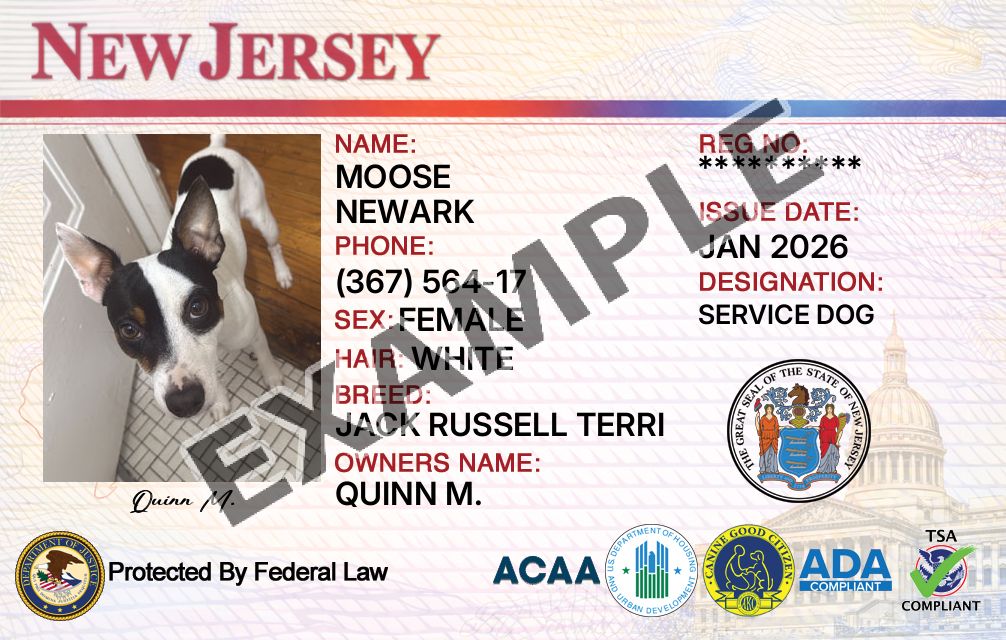
Service Dogs and Emotional Support Animals in Atlantic, New Jersey
If you’re asking, “where do I register my dog in Atlantic County, New Jersey for my service dog or emotional support dog?” the key point is that most “registration” people mean is actually a local dog license. In New Jersey, dog licensing is generally handled at the municipal level (your city or township), while Atlantic County provides related public services such as animal shelter operations and rabies/public health resources. This page explains how dog licensing requirements in Atlantic County, New Jersey typically work, what paperwork you’ll need, and how licensing differs from service dog and emotional support animal status.
Where to Register or License Your Dog in Atlantic County, New Jersey
In Atlantic County, New Jersey, dog licensing is typically issued by your local municipality (often the Municipal Clerk or local licensing official). The official county resources below are relevant for animal services, rabies information, and guidance—especially if you need help with shelter services or rabies-related public health questions.
Atlantic County Animal Shelter
- Phone: (609) 485-2345
- Hours: Open for adoption services 1:00 p.m. – 4:00 p.m. daily
- Notes: Surrender of owned animals is by appointment only (call first). Incoming strays are generally directed to the local Animal Control Officer for proper processing.
Atlantic County Division of Public Health (Rabies / Animal Exposure Information)
- Phone: (609) 645-5971 (business hours)
- After-hours phone: (609) 909-7200 (after hours, weekends, and holidays)
- Hours: 8:00 a.m. – 5:00 p.m. (business hours reference provided for rabies/public health calls)
Overview of Dog Licensing in Atlantic County, New Jersey
How dog licensing usually works (countywide vs. municipal)
For most residents, the practical answer to where to register a dog in Atlantic County, New Jersey is: you license your dog through your municipality (the city or township where you live). Atlantic County supports animal-related services (such as shelter operations and public health/rabies programs), but your local municipality typically issues the license and tag.
Local requirements can vary by municipality
Atlantic County includes multiple municipalities (for example, Atlantic City, Egg Harbor Township, Galloway Township, Hammonton, and others). While New Jersey dog licensing is guided by state law, your municipality may differ on:
- Where and how you submit the dog license application
- Whether appointments are needed
- Accepted payment methods
- Local fees and late fees
- Whether multi-year licensing is offered
- Discounts for spayed/neutered dogs (when applicable)
What You Need Before Registering a Dog
Common documents and information
While each municipality sets its process, most dog licensing requirements in Atlantic County, New Jersey will include some combination of the following items:
- Proof of current rabies vaccination (rabies certificate from a licensed veterinarian)
- Owner identification (such as a driver’s license or other ID)
- Proof of residency (if required by your municipality)
- Spay/neuter documentation (if applicable; may impact the fee)
- Dog details such as breed, color, sex, age, and name
- Payment for the licensing fee (fee amounts and accepted methods vary)
Rabies vaccination is typically central to licensing
New Jersey dog licensing rules commonly require proof of rabies vaccination before a municipal clerk (or other designated licensing official) can issue a dog license and registration tag. If you are licensing a puppy for the first time, your veterinarian can tell you when your dog is old enough to receive the rabies vaccine and when the certificate is considered valid.
Steps to Register or License a Dog in Atlantic County, New Jersey
Step-by-step (typical process)
-
Confirm your municipality’s licensing office.
Look for “Municipal Clerk” or “Dog Licensing” information from your city/township offices.
-
Gather your documents.
Rabies certificate is commonly required. Bring spay/neuter documentation if you have it.
-
Submit the application and pay the fee.
Your municipality will provide the application form and accepted payment options.
-
Receive your license and tag.
Keep the license information for your records; attach the tag to your dog’s collar as required.
-
Renew on time.
Many municipalities license annually; some may offer multi-year options. Ask your clerk about renewal dates and late fees.
Service Dog Laws in Atlantic County, New Jersey
What makes a dog a service dog (in legal terms)
A service dog is generally a dog that is individually trained to do work or perform tasks for a person with a disability. The dog’s legal status is based on its training and the handler’s disability-related need—not on a “registration number” from a single government database.
Service dog status vs. a dog license in Atlantic County, New Jersey
A dog license is a local public health and animal control tool (commonly tied to rabies vaccination and identification). Service dog status is about access rights and disability accommodations. In practice, you may need to complete both: maintain your dog’s local license and comply with applicable service animal rules in public settings.
Emotional Support Animal Rules in Atlantic County, New Jersey
What an emotional support animal is (and isn’t)
An emotional support animal (ESA) is generally an animal that provides comfort or support that helps with a person’s mental or emotional health. ESAs are not the same as service dogs because they are not necessarily trained to perform specific tasks.
ESA status vs. local licensing
ESA status typically relates to certain housing-related processes, while the dog license in Atlantic County, New Jersey is still a municipal requirement for dogs living in the community. If your ESA is a dog, your municipality may still require licensing and proof of rabies vaccination.
Dog License vs. Service Dog vs. Emotional Support Animal (ESA)
| Category | Dog License (Municipal Licensing) | Service Dog | Emotional Support Animal (ESA) |
|---|---|---|---|
| What it is | Local license/registration record for your dog issued by your city/township; often includes a tag. | A dog individually trained to do work or perform tasks for a person with a disability. | An animal that provides comfort/support related to a person’s emotional or mental health needs. |
| Who issues it | Your municipality (commonly the Municipal Clerk or designated licensing official). | No single universal federal registry; status is based on training and disability-related need. | No single universal federal registry; often supported by documentation for specific contexts (such as housing). |
| Common requirements | Rabies vaccination proof; may require proof of spay/neuter; owner/residency details; fees. | Task training; must be under control; access rules depend on setting and applicable laws. | Varies by context; not task-trained by definition; typically not the same public access rights as a service dog. |
| Purpose | Public health and animal control identification; helps fund local animal control/shelter/rabies programs. | Disability accommodation and assistance through trained tasks. | Support/comfort; commonly discussed in housing-related accommodation processes. |
| Do you still license the dog locally? | Yes, if your municipality requires it. | Often yes—service dog status does not automatically replace local licensing rules. | Often yes—ESA status does not typically replace local licensing rules. |
If you’re unsure whether your specific municipality has additional steps for an animal control dog license in Atlantic County, New Jersey, contact your local municipal office for the most accurate instructions.
Frequently Asked Questions
Register A Dog In Other New Jersey Counties
Select your county below to get started with your dog’s ID card. Requirements and license designs may vary by county, so choose your location to see the correct options and complete your pup’s registration.
- Bergen County Dog Registration
- Burlington County Dog Registration
- Camden County Dog Registration
- Cape May County Dog Registration
- Cumberland County Dog Registration
- Essex County Dog Registration
- Gloucester County Dog Registration
- Hudson County Dog Registration
- Hunterdon County Dog Registration
- Mercer County Dog Registration
- Middlesex County Dog Registration
- Monmouth County Dog Registration
- Morris County Dog Registration
- Ocean County Dog Registration
- Passaic County Dog Registration
- Salem County Dog Registration
- Somerset County Dog Registration
- Sussex County Dog Registration
- Union County Dog Registration
- Warren County Dog Registration